
Legendary Football Shirts: Iconic Kits, Players, and Achievements
Updated: Aug 18
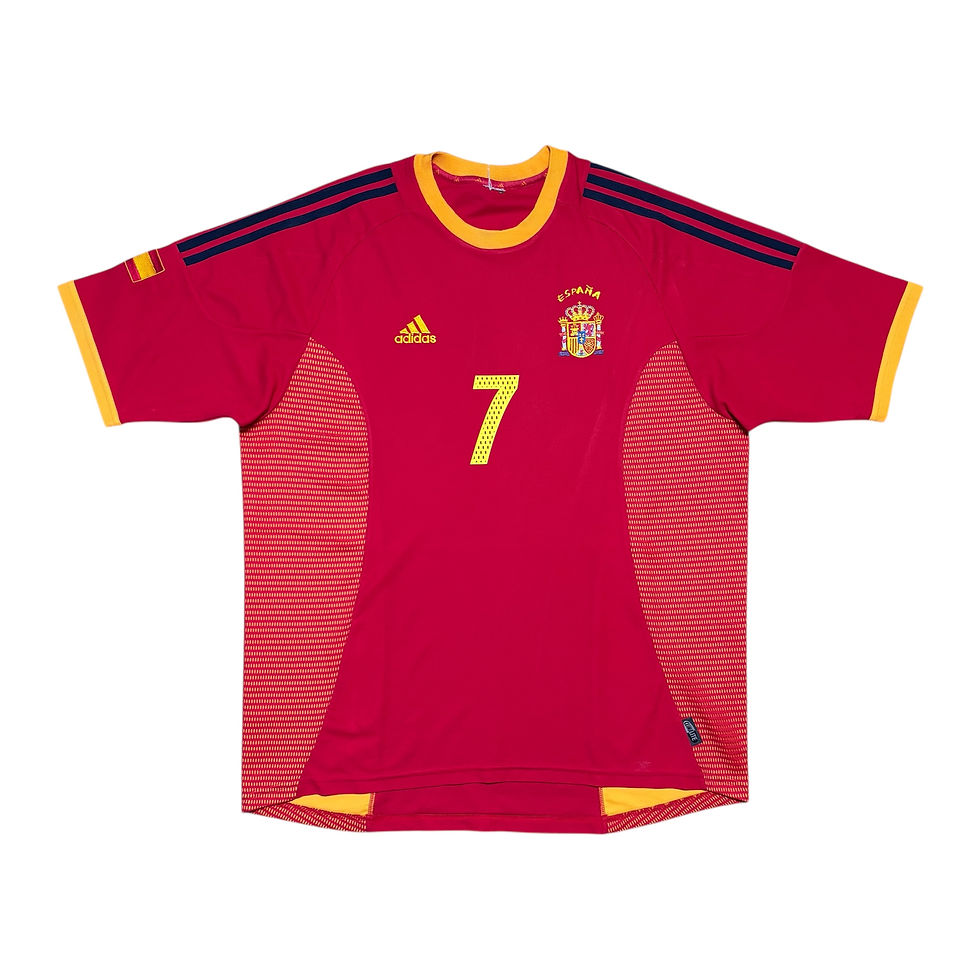
The 2002–04 Spain Home Shirt with Raúl 7: Leadership, Legacy and a Defining Era for La Roja
1. Introduction
Football shirts often tell stories that go far beyond results and trophies. The 2002–04 Spain home shirt with Raúl’s number 7 is one such example. While it is not linked to a major international title, it represents a deeply significant period in the evolution of Spanish football and the international legacy of one of the country’s greatest-ever players. This shirt embodies leadership, expectation, and the weight of a footballing nation searching for consistency on the world stage.
Produced by adidas, the shirt was worn during a cycle that included the 2002 FIFA World Cup and the build-up to UEFA Euro 2004. At the heart of this era stood Raúl González, captain, record goalscorer, and embodiment of Spanish footballing values. His presence gave Spain credibility, direction and belief during a period when the team often entered tournaments with high hopes but left with lingering frustration.
This article explores the full historical, cultural and sporting context of the 2002–04 Spain home shirt. It examines Raúl’s leadership, Spain’s performances, the symbolism of the shirt’s design, and its lasting importance for fans and collectors today.

2. Spain in the Early 2000s: Context and Expectations
2.1 The Post-1990s National Identity
By the early 2000s, Spain had established itself as a technically gifted footballing nation, yet one plagued by inconsistency at major tournaments. Despite producing world-class players, Spain had not won a senior international title since the 1964 European Championship. The country regularly qualified for tournaments but often exited earlier than expected.
2.2 Spain’s Reputation on the International Stage
Spain entered the 2002–04 cycle with a squad blending experience and emerging talent. Players like Hierro and Raúl represented continuity, while younger figures such as Xavi, Casillas and Puyol hinted at a promising future. Expectations were high, but skepticism remained among supporters and international observers.
3. Raúl González: Captain, Symbol and Standard-Bearer
3.1 Raúl’s Role with the National Team
Raúl wore the captain’s armband during much of this period and was Spain’s primary attacking reference. His intelligence, movement and finishing made him indispensable. Beyond goals, his professionalism and consistency set standards within the squad.
3.2 Records, Goals and Leadership
By this era, Raúl had become Spain’s all-time leading goalscorer, a record he held until later surpassed. His goals at major tournaments, particularly World Cups, solidified his status as one of Spain’s most reliable performers under pressure.
4. The 2002 FIFA World Cup
4.1 Spain’s Campaign
Spain entered the 2002 World Cup in South Korea and Japan with optimism. The team performed well in the group stage and progressed to the knockout rounds. Their campaign ended controversially in the quarter-finals against South Korea, a match remembered for disputed refereeing decisions.
4.2 Raúl’s Influence and Key Moments
Raúl scored important goals during the tournament and remained Spain’s attacking focal point. His leadership was evident throughout the competition, even as frustration mounted following the elimination.
5. The Road to Euro 2004
5.1 Qualification Campaign
Spain qualified for Euro 2004 through a playoff after finishing second in their group. Raúl remained central to the team, contributing goals and experience during a demanding qualification process.
5.2 Squad Evolution and Tactical Direction
This period saw increasing involvement from midfielders like Xavi and Baraja, indicating a gradual shift toward the possession-based style that would later define Spain’s golden era.
6. Euro 2004: The End of a Cycle
Although this specific shirt was part of the broader cycle, Spain exited Euro 2004 at the group stage. The tournament marked the conclusion of an era for several senior players and prompted structural reflection within Spanish football.
7. Shirt Design and Cultural Significance
7.1 adidas Design Philosophy
The 2002–04 home shirt featured a classic red base with subtle yellow detailing, reflecting Spain’s national colours. adidas opted for a clean, timeless aesthetic rather than experimental design.
7.2 Visual Identity and Symbolism
The simplicity of the shirt mirrored Spain’s footballing identity at the time: disciplined, technical and grounded in tradition. Raúl’s number 7 added symbolic weight, reinforcing continuity and leadership.
8. Collectability and Historical Value
For collectors, this shirt holds value not because of trophies, but because of context. It represents Raúl at his international peak and Spain on the brink of transformation. Shirts from transitional eras often gain appreciation as historical markers.
9. Why This Shirt Still Matters Today
Today, this shirt is remembered as part of the journey toward Spain’s later dominance. It symbolizes resilience, leadership and lessons learned. For fans, it recalls a captain who carried expectations with dignity and consistency.
10. Conclusion
The 2002–04 Spain home shirt with Raúl 7 is a powerful reminder that football history is not written only by victories. It represents a nation learning, evolving and preparing for future greatness. Raúl’s leadership during this era remains a benchmark for professionalism and commitment. This shirt captures the end of one chapter and the quiet beginning of another—making it a meaningful and enduring piece of football heritage.
The 2016–17 Spain Home Shirt with Iniesta 6: Legacy, Leadership and the Closing Chapter of a Golden Generation

1. Introduction
The 2016–17 Spain home shirt with Andrés Iniesta’s number 6 occupies a unique place in modern football history. Unlike shirts associated with trophy-laden triumphs, this one represents reflection, transition and legacy. It belongs to a period when Spain, once the undisputed ruler of international football, was learning how to redefine itself after an unprecedented era of success. At the heart of this process stood Iniesta—quiet leader, midfield architect and one of the most respected players the game hcas ever seen.
Produced by adidas, the shirt was worn during Spain’s participation in UEFA Euro 2016 and the early stages of qualification for the 2018 FIFA World Cup. Iniesta, already a legend by this point, embodied the values that had defined Spain’s golden generation: intelligence, humility, technical excellence and collective responsibility. While results no longer matched the heights of 2008–2012, his presence ensured continuity and credibility during a period of change.
This article explores the full context of the 2016–17 Spain home shirt, examining Iniesta’s role, Spain’s evolving identity, the significance of the kit’s design and its lasting importance for supporters and collectors. Rather than focusing solely on results, it highlights why this shirt matters as a historical marker of the end of one of football’s greatest eras.

2. Spain After the Golden Era
2.1 The End of Dominance
Between 2008 and 2012, Spain achieved something unprecedented: three consecutive major international titles—UEFA Euro 2008, the 2010 FIFA World Cup and UEFA Euro 2012. Andrés Iniesta played a decisive role throughout this period, most famously scoring the winning goal in the 2010 World Cup final. By 2016, however, that era had clearly come to an end.
Spain’s early elimination at the 2014 World Cup signaled the decline of a cycle built around possession dominance and veteran leadership. As the team entered the Euro 2016 cycle, expectations were more cautious, yet hope remained that experienced players like Iniesta could guide a competitive squad.
2.2 A Team in Transition
The 2016 squad combined remnants of the golden generation—Iniesta, Ramos, Piqué, Busquets—with newer creative figures such as Isco and Morata. The challenge lay in balancing experience with renewal. Iniesta, though no longer at his physical peak, remained indispensable due to his tactical understanding and calm influence.
3. Andrés Iniesta: The Symbol of an Era
3.1 Iniesta’s International Legacy
By 2016, Iniesta had already secured his place among the greatest players in football history. His achievements included:
FIFA World Cup winner (2010)
UEFA European Championship winner (2008, 2012)
UEFA Euro 2012 Player of the Tournament
These accomplishments framed his role during the 2016–17 period. Every appearance was viewed through the lens of legacy rather than potential.
3.2 Leadership Without Noise
Unlike many captains, Iniesta led through example rather than command. His style—simple passes, intelligent movement, flawless control—set standards within the team. Wearing number 6, he represented balance and continuity in a squad undergoing transformation.
4. UEFA Euro 2016
4.1 Spain’s Tournament Campaign
Spain entered Euro 2016 as defending champions but exited in the Round of 16 after defeat to Italy. The result confirmed that the era of dominance had ended, but the tournament also highlighted moments of quality and structure within the team.
4.2 Iniesta’s Role on the Pitch
Iniesta delivered one of his strongest performances of the tournament against the Czech Republic in the group stage, controlling the tempo and demonstrating his enduring class. Even as Spain struggled collectively, his composure and intelligence remained evident.
5. The Road Toward the 2018 World Cup
5.1 Qualification Matches
Following Euro 2016, Spain began qualification for the 2018 World Cup. Iniesta continued to feature, providing experience and tactical guidance while younger players took on more responsibility.
5.2 Tactical Evolution and Squad Changes
Spain gradually shifted toward a more direct, flexible approach. While possession remained important, transitions and vertical play gained prominence. Iniesta’s role adapted accordingly, focusing more on control and rhythm.
6. Shirt Design and National Identity
6.1 adidas Design Philosophy
The 2016–17 home shirt featured a bold red base with subtle tonal striping and yellow accents. adidas opted for a clean, modern look that respected Spain’s traditional colours without excessive ornamentation.
6.2 Visual Symbolism of the 2016 Home Kit
The shirt’s simplicity reflected maturity rather than experimentation. Paired with Iniesta’s number 6, it symbolised stability, experience and elegance—qualities long associated with Spanish football.
7. Cultural Impact and Fan Perception
For supporters, this shirt represents respect rather than glory. It is associated with appreciation for a generation that gave Spain its greatest moments. Iniesta, in particular, is remembered with near-universal admiration across clubs and nations.
8. Collectability and Historical Importance
Collectors value this shirt because it marks the final phase of Iniesta’s international career. Shirts linked to closing chapters of legendary players often gain long-term significance, especially when tied to iconic numbers and authentic designs.
9. Why This Shirt Still Matters Today
Today, the 2016–17 Spain home shirt serves as a reminder that football greatness is not defined solely by trophies. It honours leadership, humility and sustained excellence. Iniesta’s presence gives the shirt emotional and historical weight that transcends results.
10. Conclusion
The 2016–17 Spain home shirt with Iniesta 6 is a tribute to one of football’s purest artists and to an era that reshaped international football forever. While it does not commemorate a title, it captures something equally valuable: the dignity of transition, the passing of responsibility and the enduring influence of a true legend. For fans and collectors alike, it stands as a meaningful symbol of Spain’s footballing identity and the legacy of Andrés Iniesta.
The 2018 Uruguay Home Shirt with Cavani 21: World Cup Grit, Decisive Goals and a Striker at His Peak
1. Introduction
The 2018 Uruguay home shirt with Edinson Cavani’s number 21 represents one of the most emotionally resonant international kits of the modern era. It symbolises resilience, tactical intelligence and the importance of decisive moments on football’s biggest stage. Unlike shirts defined by tournament victory, this one is remembered for its intensity, discipline and a striker who delivered when it mattered most.
Produced by Puma, the shirt was worn during Uruguay’s impressive run at the 2018 FIFA World Cup in Russia. Entering the tournament with a blend of experienced leaders and disciplined structure, Uruguay once again demonstrated why they remain one of international football’s most respected nations. At the centre of their attacking play stood Cavani, whose performances embodied commitment, intelligence and ruthless efficiency.
This article explores the full significance of the 2018 Uruguay home shirt. It examines the national team’s identity, Cavani’s role and influence, the defining moments of the World Cup campaign, the design and symbolism of the shirt, and why it remains an essential piece for collectors and fans alike.

2. Uruguay Entering the 2018 World Cup
2.1 Tradition, Identity and Expectation
Uruguay entered the 2018 World Cup with a proud footballing tradition built on discipline, unity and competitive spirit. Despite a relatively small population, the national team consistently competed with the world’s elite.
2.2 A Team Built on Balance
The squad combined defensive excellence, midfield work rate and attacking intelligence. The partnership of Cavani and Suárez offered experience and complementary qualities, supported by a disciplined defensive line.
3. Edinson Cavani and the National Team
3.1 From Promise to Leadership
By 2018, Cavani had firmly established himself as one of Uruguay’s most important players. His work rate, movement and finishing made him indispensable.
3.2 The Meaning of Number 21
The number 21 became synonymous with Cavani’s identity for Uruguay—representing consistency, sacrifice and decisive impact.
4. The 2018 Squad and Tactical Structure
4.1 Defensive Foundations
Godín and Giménez anchored a defence built on positioning and communication, providing stability throughout the tournament.
4.2 Midfield Work Rate and Attacking Support
The midfield prioritised balance, ensuring Cavani and Suárez were supported without compromising defensive solidity.

5. The World Cup Group Stage
5.1 Control and Defensive Solidity
Uruguay progressed through the group stage without conceding a goal, reflecting organisation and discipline.
5.2 Cavani’s Growing Influence
While the attack was balanced, Cavani’s movement and intelligence increasingly shaped Uruguay’s attacking threat.
6. The Round of 16: Uruguay vs Portugal
6.1 Tactical Battle
Facing the reigning European champions, Uruguay approached the match with discipline and precision.
6.2 Cavani’s Iconic Brace
Cavani scored both goals in a 2–1 victory, delivering one of the standout individual performances of the tournament. His first was a perfectly timed header, followed by a clinical finish from distance—moments that defined Uruguay’s campaign.
7. The Quarter-Final and Injury Setback
Cavani’s injury before the quarter-final proved a major blow. Uruguay’s exit highlighted his importance and influence within the team.
8. Shirt Design and National Identity
8.1 Puma’s 2018 Uruguay Design
The shirt featured a clean sky-blue base, maintaining tradition while offering a modern performance fit.
8.2 The Symbolism of Celeste
The colour represents national pride, resilience and footballing heritage.
9. Cultural Impact and Fan Connection
For supporters, this shirt evokes pride and admiration for a team that embodied Uruguay’s values.
10. Collectability and Historical Value
Collectors value this shirt for its association with Cavani’s iconic World Cup performance and Uruguay’s strong showing.
11. Why This Shirt Still Matters Today
Today, it stands as a reminder that impact is defined by moments, not only trophies.
12. Conclusion
The 2018 Uruguay home shirt with Cavani 21 captures the essence of international football—discipline, emotion and decisive brilliance. It commemorates a striker at his peak and a nation that once again proved its competitive spirit on the world stage. For fans and collectors, it remains a timeless symbol of pride, resilience and unforgettable World Cup moments.
The 1994 Italy Home Shirt: Azzurri Pride, World Cup Drama and One of Football’s Most Iconic Camparooigns
1. Introduction
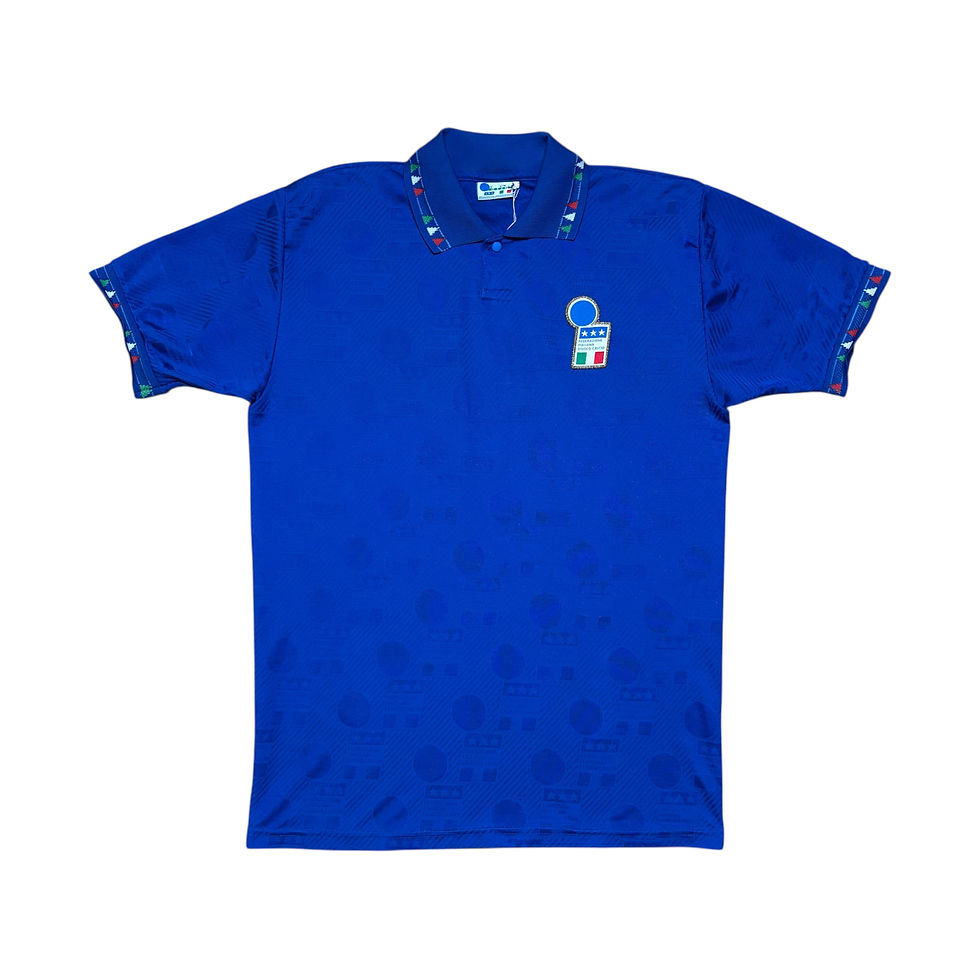
The 1994 Italy home shirt is one of the most recognisable and emotionally charged international kits in football history. It represents a tournament defined by tension, resilience and unforgettable moments, culminating in one of the most dramatic World Cup finals ever played. More than just a shirt, it is a symbol of national identity, pride and the fine margins that separate triumph from heartbreak.
Produced by Diadora, the shirt was worn by Italy during the FIFA World Cup in the United States. Under Arrigo Sacchi, the Azzurri navigated a challenging tournament to reach the final, relying on defensive organisation, tactical intelligence and the extraordinary individual brilliance of Roberto Baggio. Although Italy ultimately finished as runners-up, the 1994 campaign remains deeply etched into football history.
This article explores the full significance of the 1994 Italy home shirt. It examines the context leading into the World Cup, the squad and tactical structure, the dramatic matches that defined the tournament, the design of the shirt itself and why it continues to hold powerful meaning for fans and collectors around the world.
2. Italy Before the 1994 World Cup
2.1 Expectations and Pressure
Italy entered the 1994 World Cup with immense expectations. As one of football’s traditional powerhouses, the Azzurri were always judged on results rather than style alone. Previous World Cup successes had set a high benchmark.
2.2 The Tactical Identity of the Azzurri
Italian football was synonymous with organisation, discipline and defensive mastery. Sacchi sought to modernise this identity while preserving its core strengths.
3. The 1994 Squad
3.1 Defensive Excellence
The backbone of the team featured legendary defenders such as Maldini, Baresi and Costacurta. Their understanding and positioning were fundamental to Italy’s progress.
3.2 Midfield Structure and Attacking Options
The midfield balanced energy and control, while the attack relied on movement, intelligence and moments of inspiration.
4. Arrigo Sacchi and Tactical Philosophy
4.1 Organisation and Collective Discipline
Sacchi emphasised teamwork and compactness, ensuring Italy were difficult to break down.
4.2 Balancing Control and Creativity
While structure was central, creative freedom—particularly for Baggio—was encouraged in decisive moments.
5. The World Cup Group Stage
5.1 A Difficult Start
Italy’s tournament began with setbacks, forcing immediate adaptation and mental resilience.
5.2 Finding Rhythm
As the group progressed, Italy stabilised and began to assert control.
6. Roberto Baggio and Individual Brilliance
6.1 Knockout-Stage Heroics
Baggio delivered decisive goals in the knockout rounds, carrying Italy through moments of crisis.
6.2 Leadership Under Pressure
Despite physical discomfort, he remained the team’s focal point and inspiration.
7. The Road to the Final
7.1 Quarter-Final and Semi-Final Drama
Italy’s victories were defined by narrow margins and intense concentration.
7.2 Mental Strength and Resilience
Each match demanded composure and belief, qualities Italy consistently displayed.
8. The 1994 World Cup Final
8.1 Italy vs Brazil
The final was tense and tactical, ending scoreless after extra time.
8.2 A Penalty Shootout for History
Brazil claimed victory on penalties, leaving Italy as runners-up in one of the most memorable World Cup endings.
9. Shirt Design and National Identity
9.1 Diadora and Italian Tradition
Diadora’s design respected tradition, featuring a clean azzurri base with subtle detailing.
9.2 The Symbolism of Azzurri
The blue shirt symbolised unity, history and national pride.
10. Cultural Impact and Global Memory
This shirt is inseparable from images of summer heat, packed stadiums and footballing drama. It remains one of the most remembered kits in World Cup history.
11. Collectability and Historical Value
Collectors prize the 1994 Italy home shirt for its association with a legendary World Cup run and iconic players.
12. Why This Shirt Still Matters Today
Today, it represents resilience, heartbreak and football at its most emotional.
13. Conclusion
The 1994 Italy home shirt stands as a powerful reminder of football’s beauty and cruelty. It captures a tournament of extraordinary drama, iconic performances and enduring legacy. For fans and collectors alike, it remains one of the most meaningful international shirts ever worn—a timeless symbol of Azzurri pride.


The 2006–07 Inter Milan Home Shirt with Zanetti 4: Captaincy, Consistency and One of Serie A’s Greatest Seasons
1. Introduction
The 2006–07 Inter Milan home shirt with Javier Zanetti’s number 4 represents one of the most dominant seasons in Italian football history. It is a shirt associated with authority, consistency and a club that finally translated ambition into overwhelming domestic success. At the heart of that success stood Zanetti—captain, leader and embodiment of Inter’s values.
Produced by Nike, this shirt was worn during a season in which Inter claimed the Serie A title with a commanding lead, setting a points record at the time and reasserting themselves as the dominant force in Italy. Under Roberto Mancini, Inter combined tactical discipline with attacking flair, supported by a squad rich in experience and quality. Yet despite the presence of stars such as Ibrahimović, Vieira and Figo, it was Zanetti’s leadership that provided stability and direction.
This article explores the full significance of the 2006–07 Inter Milan home shirt. It examines the club’s context following years of frustration, Zanetti’s captaincy, the tactical structure of the team, the historic league campaign and why this shirt remains one of the most important pieces in Inter’s modern history.

2. Inter Milan Before 2006–07
2.1 Ending the Wait
Inter entered the mid-2000s determined to end a long period without sustained domestic dominance. Although cup success had arrived earlier, league consistency remained elusive.
2.2 A New Era of Authority
The 2005–06 season marked a turning point, and by 2006–07 Inter were ready to impose themselves fully.

3. Javier Zanetti: The Ultimate Captain
3.1 Leadership Through Example
Zanetti captained Inter not through words but through relentless professionalism, work rate and tactical discipline. His consistency made him indispensable.
3.2 The Meaning of Number 4
The number 4 symbolised reliability and structure. Zanetti elevated it into a symbol of leadership and commitment.
4. The 2006–07 Squad and Tactical Identity
4.1 Roberto Mancini’s System
Mancini built a team capable of controlling matches through defensive organisation and midfield balance.
4.2 Balance Between Power and Control
With Ibrahimović leading the line and Cambiasso anchoring midfield, Inter dominated both physically and tactically.
5. The Serie A 2006–07 Campaign
5.1 A Record-Breaking Title
Inter won the league with authority, setting a then-record points total and rarely dropping control of matches.
5.2 Defensive Solidity and Midfield Control
The team’s defensive record reflected structure and discipline, areas where Zanetti’s influence was crucial.
6. Zanetti’s Role During the Season
6.1 Versatility and Reliability
Zanetti featured across multiple positions, adapting seamlessly to tactical needs.
6.2 Leadership in Key Moments
In crucial fixtures, his composure and decision-making anchored the team.
7. Domestic Cups and European Context
While European success remained elusive, domestic dominance reaffirmed Inter’s authority within Italy.
8. Shirt Design and Inter Identity
8.1 Nike and the Nerazzurri Tradition
Nike preserved Inter’s iconic blue-and-black stripes while modernising the fit.
8.2 Blue, Black and Authority
The colours reflected strength, tradition and resilience.
9. Cultural Impact and Fan Connection
Supporters remember this shirt as the symbol of Inter’s return to dominance.
10. Collectability and Historical Value
Collectors value this shirt due to its association with a historic Serie A season and one of the club’s greatest captains.
11. Why This Shirt Still Matters Today
Today, it represents leadership, loyalty and sustained excellence.
12. Conclusion
The 2006–07 Inter Milan home shirt with Zanetti 4 stands as a tribute to one of Serie A’s most commanding seasons and one of football’s greatest captains. It captures Inter at their most authoritative and Zanetti at his most influential. For fans and collectors, it remains a timeless symbol of Nerazzurri pride.
The 2023–24 Real Madrid Home Shirt with Kroos 8: A Perfect Farewell, European Glory and the Art of Midfield Control
1. Introduction
The 2023–24 Real Madrid home shirt with Toni Kroos’ number 8 represents one of the most complete farewell seasons ever delivered by an elite footballer. Unlike many final campaigns marked by decline or reduced influence, this shirt captures Kroos at the peak of his intelligence, authority and tactical mastery—guiding Real Madrid to domestic and European supremacy in what became the final chapter of his club career.
Produced by adidas, the shirt was worn during a season defined by transition and renewal. Real Madrid entered 2023–24 without Karim Benzema, forcing a structural evolution in attack. Yet rather than instability, the club delivered one of its most controlled and dominant campaigns of the modern era. At the heart of that control stood Toni Kroos, whose understanding of space, tempo and rhythm anchored a midfield that blended youth, energy and experience.
This article explores the full significance of the 2023–24 Real Madrid home shirt. It examines the context of the season, Kroos’ enduring influence, the tactical structure of Carlo Ancelotti’s team, the dual triumph in La Liga and the Champions League, and why this shirt now stands as a historic artefact of modern football.

2. Real Madrid Entering the 2023–24 Season
2.1 Transition Without Benzema
The departure of Benzema created uncertainty. Real Madrid opted against a traditional replacement, instead reshaping their attack around mobility, depth and midfield dominance.
2.2 Expectations and Squad Evolution
The squad featured an exciting blend of generations. Jude Bellingham arrived as a transformative figure, while veterans like Kroos and Modrić provided stability and continuity.
3. Toni Kroos: Legacy Before 2023–24
3.1 A Decade of Excellence
Since joining Real Madrid in 2014, Kroos had been central to one of the most successful periods in club history, winning multiple league and European titles.
3.2 The Meaning of Number 8 at Real Madrid
The number 8 symbolised balance and intelligence. Kroos elevated it into a symbol of elegance and control.
4. The 2023–24 Squad and Tactical Identity
4.1 Carlo Ancelotti’s Adaptation
Ancelotti adjusted tactically, using midfield dominance to compensate for the absence of a traditional striker.
4.2 Midfield Balance and Control
Kroos, Valverde, Camavinga and Bellingham formed one of Europe’s most balanced midfields.

5. Kroos’ Role During the Season
5.1 Experience and Leadership
Kroos served as an on-field conductor, organising play and dictating rhythm.
5.2 Tactical Intelligence and Consistency
His passing accuracy and positional awareness were essential to Madrid’s control of matches.
6. La Liga 2023–24
6.1 Control, Efficiency and Authority
Real Madrid secured the league title with consistency and composure, rarely losing control of matches.
6.2 Kroos’ Influence in Key Matches
Kroos’ calm presence was evident in decisive fixtures, providing structure under pressure.
7. UEFA Champions League Triumph
7.1 The Road to Wembley
Madrid navigated Europe with resilience and tactical intelligence.
7.2 Leadership on Europe’s Biggest Stage
In the final, Kroos’ composure exemplified Madrid’s experience and mentality.
8. Shirt Design and Real Madrid Identity
8.1 adidas and the Modern All-White Look
The minimalist design reinforced tradition and prestige.
8.2 The Symbolism of Simplicity
The clean aesthetic mirrored Kroos’ playing style—efficient, elegant and precise.
9. Cultural Impact and Fan Connection
Supporters view this shirt as a symbol of control, dignity and success at the highest level.
10. Collectability and Historical Value
Collectors value this shirt due to its association with Kroos’ farewell season and a Champions League–La Liga double.
11. Why This Shirt Still Matters Today
Today, it represents the ideal ending to a legendary career—success achieved through intelligence rather than spectacle.
12. Conclusion
The 2023–24 Real Madrid home shirt with Kroos 8 stands as a masterclass in how greatness concludes. It captures a farewell season defined by trophies, authority and tactical brilliance. For fans and collectors, it is not only a shirt—it is the final signature of one of football’s greatest midfielders.
The 2014–15 Real Madrid Home Shirt with Ronaldo 7: Record Goals, Global Titles and Peak Individual Brilliance

1. Introduction
The 2014–15 Real Madrid home shirt with Cristiano Ronaldo’s number 7 represents one of the most prolific individual seasons ever produced by a footballer. While trophies often define legacy, this shirt tells a deeper story—one of relentless excellence, record-breaking performance and global dominance. It captures Ronaldo at the absolute peak of his physical, technical and mental powers, delivering historic numbers while leading one of the most star-studded squads in world football.
Produced by adidas, the shirt was worn during a season that followed Real Madrid’s long-awaited tenth UEFA Champions League triumph. Expectations were immense. The club entered the campaign as the benchmark of European football, carrying the weight of history and ambition. At the heart of it all stood Cristiano Ronaldo, already a Ballon d’Or winner and global icon, determined to push standards even further.
This article explores the full significance of the 2014–15 Real Madrid home shirt. It examines the context following La Décima, Ronaldo’s extraordinary individual achievements, the team’s global successes, the design symbolism of the kit and why this shirt remains one of the most important pieces from the modern Real Madrid era.
2. Real Madrid After La Décima
2.1 The Weight of European Glory
Winning the Champions League in 2014 ended a 12-year wait and redefined Real Madrid’s modern era. The achievement elevated expectations to unprecedented levels. Every competition became a benchmark of dominance.
2.2 Expectations for a Historic Follow-Up
With Carlo Ancelotti retained and key reinforcements added, the goal was clear: sustain supremacy across all competitions.
3. Cristiano Ronaldo in 2014–15
3.1 Entering His Absolute Prime
By 2014–15, Ronaldo had refined his game to near perfection. His movement, finishing and physical conditioning allowed him to dominate matches with ruthless efficiency.
3.2 The Meaning of Number 7 at Real Madrid
The number 7 shirt at Real Madrid carries immense history. Ronaldo elevated it to a global symbol of excellence and ambition.
4. The 2014–15 Squad and Tactical Identity
4.1 Ancelotti’s Approach
Ancelotti emphasised attacking freedom supported by midfield control. Kroos and Modrić provided balance, while Ronaldo thrived in advanced areas.
4.2 A Team Built for Attacking Power
With Bale and Benzema alongside Ronaldo, Madrid possessed one of the most feared attacking trios in football.
5. The Start of the Season: Momentum and Records
5.1 UEFA Super Cup Triumph
Real Madrid began the season by winning the UEFA Super Cup, reinforcing their European dominance.
5.2 A Historic Winning Run
The team embarked on a remarkable winning streak, showcasing consistency and attacking flair.

6. FIFA Club World Cup Success
6.1 Global Dominance
Madrid claimed the FIFA Club World Cup, confirming their status as world champions.
6.2 Ronaldo on the World Stage
Ronaldo’s presence amplified Madrid’s global appeal, reinforcing his status as the face of world football.
7. La Liga 2014–15
7.1 Goalscoring at an Unprecedented Rate
Ronaldo finished the league season as top scorer, winning the Pichichi Trophy and the European Golden Shoe.
7.2 The Race for the Title
Despite Ronaldo’s output, Madrid finished second in La Liga, highlighting the fine margins at elite level.
8. European Competition and Challenges
Madrid’s Champions League campaign ended earlier than hoped, underlining the difficulty of sustaining dominance.
9. Shirt Design and Real Madrid Identity
9.1 adidas and the All-White Legacy
The clean white design reinforced tradition, prestige and authority.
9.2 Ronaldo 7 as a Global Symbol
The combination of white and number 7 became one of football’s most recognisable images.
10. Cultural Impact and Fan Connection
For fans, this shirt symbolises peak Ronaldo—powerful, decisive and relentless.
11. Collectability and Historical Value
Collectors value this shirt for its association with Ronaldo’s record-breaking season and global titles.
12. Why This Shirt Still Matters Today
Today, it stands as a reminder that individual brilliance can define an era, even without domestic dominance.
13. Conclusion
The 2014–15 Real Madrid home shirt with Ronaldo 7 represents footballing excellence at its highest level. It captures a season where records fell, standards were raised and one player pushed the limits of possibility. For fans and collectors alike, it remains a symbol of peak performance and global dominance.
The 2012–13 Chelsea Home Shirt with Mata 10: Creativity, European Glory and a Midfield Maestro at His Peak

1. Introduction
The 2012–13 Chelsea home shirt with Juan Mata’s number 10 represents a defining moment in the club’s modern history—an era shaped by creativity, European ambition and tactical evolution. While Chelsea entered the season as reigning UEFA Champions League holders, the campaign unfolded in unexpected ways, ultimately ending with continental success of a different kind. At the centre of it all stood Juan Mata, the creative heartbeat of the team.
Produced by adidas, the shirt was worn during a season that demanded adaptability and resilience. Chelsea navigated managerial changes, tactical adjustments and intense competition across multiple fronts. Through it all, Mata remained a constant presence, providing imagination, composure and decisive contributions. Wearing the prestigious number 10 shirt, he became the focal point of Chelsea’s attacking play and one of the most influential midfielders in European football that season.
This article explores the full context of the 2012–13 Chelsea home shirt. It examines the club’s situation following Champions League glory, Mata’s role and influence, the Europa League triumph, the aesthetic identity of the kit and why this shirt remains an essential piece of Chelsea history for fans and collectors alike.
2. Chelsea After Champions League Glory
2.1 A New Status in Europe
Chelsea entered the 2012–13 season with unprecedented prestige after winning the Champions League for the first time in 2012. Expectations were immense, and every opponent treated matches against Chelsea as high-profile encounters.
2.2 Managing Transition and Expectation
Success brought pressure. Tactical balance became more difficult to maintain, and consistency proved elusive, particularly in domestic competition.
3. Juan Mata at Chelsea
3.1 Arrival and Immediate Impact
Since arriving at Chelsea in 2011, Mata had quickly established himself as the team’s most creative force. His vision, technique and intelligence made him indispensable.
3.2 The Responsibility of Number 10
Wearing number 10 symbolised Mata’s central role. He embraced responsibility, dictating tempo and linking midfield with attack.
4. The 2012–13 Season in Context
4.1 Managerial Changes
The season featured managerial change, demanding adaptability from players. Mata’s consistency provided stability during uncertainty.
4.2 Squad Balance and Tactical Identity
Chelsea combined experience with emerging talent, including Eden Hazard and Oscar, forming one of Europe’s most technically gifted attacking units.
5. Mata’s Individual Brilliance
5.1 Goals, Assists and Influence
Mata finished the season as Chelsea’s leading assist provider and among the top contributors for goals. His influence was visible across competitions.
5.2 Chelsea Player of the Year
Mata was voted Chelsea Player of the Year for the second consecutive season, reflecting his importance and popularity.
6. The UEFA Europa League Campaign
6.1 From Champions League to Europa League
After exiting the Champions League group stage, Chelsea entered the Europa League with determination.
6.2 The Road to the Final
Chelsea progressed through the competition with discipline and quality, with Mata playing a key creative role.

7. The Europa League Final
7.1 Chelsea vs Benfica
Chelsea defeated Benfica in the final, securing the Europa League title and becoming the first club to hold both major European trophies simultaneously.
7.2 A Historic European Double
The victory added another major honour to Chelsea’s modern era and reinforced their European pedigree.
8. Shirt Design and Club Identity
8.1 adidas and Chelsea’s Modern Look
The 2012–13 home shirt featured a clean blue base with subtle detailing, reflecting Chelsea’s identity.
8.2 The Meaning of Blue and Number 10
Paired with Mata’s number 10, the shirt symbolised creativity, intelligence and leadership.
9. Cultural Impact and Fan Connection
Supporters remember this shirt as a symbol of creativity and European success. Mata’s performances created a deep emotional connection.
10. Collectability and Historical Value
Collectors value this shirt for its association with European silverware and Mata’s peak years. The number 10 adds prestige and narrative weight.
11. Why This Shirt Still Matters Today
Today, the shirt represents artistry in midfield and a season where creativity triumphed over uncertainty.
12. Conclusion
The 2012–13 Chelsea home shirt with Mata 10 captures a season of transition, resilience and European success. It honours one of Chelsea’s most technically gifted players and a campaign that delivered silverware against the odds. For fans and collectors, it remains a meaningful and elegant reminder of a creative era at Stamford Bridge.
The 2010–11 Manchester United Home Shirt with Nani 17: Creativity, Consistency and a Title-Winning Transformation

1. Introduction
The 2010–11 Manchester United home shirt with Nani’s number 17 represents one of the most underrated yet essential chapters in the club’s modern history. While some seasons are remembered for individual superstars or dramatic finales, this campaign stands out for its balance, maturity and collective efficiency. At the heart of that balance was Nani, who, during this season, finally transformed from a mercurial talent into Manchester United’s primary creative force.
Produced by Nike, the 2010–11 home shirt was worn as United reclaimed the Premier League title, surpassing Liverpool’s long-standing record by securing their 19th English league championship. It was also the season in which United reached the UEFA Champions League final at Wembley. Though they finished runners-up in Europe, the domestic success firmly re-established United at the summit of English football.
For Nani, this season marked the peak of his time at Old Trafford. Wearing number 17, he delivered consistent performances, decisive goals and a steady stream of assists. No longer a supporting act, he became the player United relied upon for creativity from wide areas. This article explores the full significance of the 2010–11 Manchester United home shirt, focusing on Nani’s breakthrough, the tactical structure of the team, the symbolism of the long-sleeve design and why this shirt remains a key piece of modern Manchester United history.
2. Manchester United at the Start of the 2010–11 Season
2.1 Transition and Renewal
Entering the 2010–11 season, Manchester United were undergoing subtle transition. Several senior players were approaching the latter stages of their careers, while younger talents such as Javier Hernández were being integrated into the squad. Sir Alex Ferguson’s challenge was to maintain competitiveness while evolving the team.
2.2 Ferguson’s Tactical Balance
Rather than relying on a single attacking focal point, United focused on structure, defensive solidity and efficiency. The team conceded fewer goals than any other side in the league, and wide players like Nani played a vital role in providing attacking thrust.
3. Nani’s Evolution at Manchester United
3.1 From Flashes of Talent to Reliability
Prior to 2010–11, Nani was often criticised for inconsistency. That perception changed dramatically during this season. He improved his decision-making, end product and defensive contribution, becoming indispensable.
3.2 The Importance of Number 17
The number 17 shirt had long been associated with flair at United. Nani embraced that legacy, delivering performances that justified the responsibility.

4. The 2010–11 Premier League Campaign
4.1 Consistency Over Spectacle
United’s title-winning campaign was built on control rather than dominance. They lost very few matches and consistently took points in difficult fixtures.
4.2 Nani’s Decisive Contributions
Nani finished the league season among United’s top contributors for goals and assists. He scored crucial goals against direct rivals and often decided matches with moments of individual quality.
5. The UEFA Champions League Journey
5.1 Tactical Maturity in Europe
United navigated the Champions League with discipline and efficiency, eliminating strong opponents through controlled performances.
5.2 The Final at Wembley
The final against Barcelona ended in defeat, but United’s journey reflected tactical maturity and resilience. Nani featured prominently throughout the campaign.
6. Key Partnerships and Squad Dynamics
Nani benefited from partnerships with Evra on the left flank and from intelligent movement by Rooney and Hernández, allowing him space to influence matches.
7. Shirt Design and the Long-Sleeve Identity
7.1 Nike’s 2010–11 Home Design
The shirt featured a traditional red base with subtle black and white detailing, reflecting a classic United aesthetic.
7.2 Why Long Sleeves Matter to Collectors
Long-sleeve versions are increasingly rare and highly valued, offering enhanced authenticity and visual appeal tied to cold-weather fixtures.
8. Cultural Impact and Fan Perception
For supporters, this shirt recalls reliability, professionalism and quiet dominance. It represents a season where United proved they could win without excess.
9. Collectability and Historical Value
Collectors value this shirt for its association with United’s record-breaking title and Nani’s peak. The long-sleeve version adds rarity and desirability.
10. Why This Shirt Still Matters Today
Today, the shirt is remembered as a symbol of evolution—both for the club and for Nani as a player who fulfilled his potential.
11. Conclusion
The 2010–11 Manchester United home shirt with Nani 17 captures a season defined by growth, consistency and achievement. It represents Nani’s transformation into a leader, United’s return to domestic dominance and a club that once again set the benchmark in English football. For fans and collectors, it remains a significant and often underappreciated classic.
The 2007–09 Manchester United Home Shirt with Rooney 10: Relentless Drive, European Glory and the Peak of a Dynasty

1. Introduction
The 2007–09 Manchester United home shirt with Wayne Rooney’s number 10 represents one of the most dominant eras in the club’s storied history. It is a shirt inseparably linked to relentless winning, tactical excellence and a team that set the standard for modern football. Worn during back-to-back Premier League titles and Manchester United’s 2008 UEFA Champions League triumph, this shirt symbolises both collective supremacy and the tireless brilliance of one of England’s greatest forwards.
Produced by Nike, the shirt was worn across two extraordinary seasons under Sir Alex Ferguson. At the centre of United’s attacking system stood Rooney—energetic, selfless and ferociously competitive. While Cristiano Ronaldo often captured headlines with goals and individual accolades, Rooney’s contribution was equally essential. Wearing number 10, he embodied sacrifice, intelligence and relentless work ethic, redefining what it meant to be a modern forward.
This article explores the full significance of the 2007–09 Manchester United home shirt. It examines the tactical and cultural context of the era, Rooney’s evolution as a player, the team’s major triumphs, the aesthetics of the kit and why this shirt remains one of the most respected and collectible in United’s modern history.
2. Manchester United Before 2007
2.1 Rebuilding After Transition
Following Arsenal and Chelsea’s dominance in the mid-2000s, Manchester United entered a rebuilding phase. Ferguson prioritised youth, discipline and long-term planning, gradually assembling a squad capable of sustained success.
2.2 Ferguson’s Long-Term Vision
By 2007, Ferguson’s vision was fully realised. A spine built around Ferdinand, Vidić, Scholes and Van der Sar provided stability, while Rooney and Ronaldo delivered explosive attacking potential.
3. Wayne Rooney: From Prodigy to Complete Forward
3.1 Embracing the Number 10
Taking on the number 10 shirt signified responsibility. Rooney accepted it fully, becoming a link between midfield and attack, often sacrificing personal statistics for team success.
3.2 Sacrifice, Versatility and Leadership
Rooney played across multiple positions—forward, wide attacker, supporting striker—demonstrating tactical intelligence and unwavering commitment.
4. The 2007–08 Season
4.1 Premier League Triumph
Manchester United won the Premier League with consistency and authority. Rooney contributed goals, assists and relentless pressing across the campaign.
4.2 UEFA Champions League Glory
The 2008 Champions League final against Chelsea crowned United as champions of Europe. Rooney played a crucial role throughout the tournament, contributing decisive performances on the road to Moscow.

5. The 2008–09 Season
5.1 Domestic Dominance
United retained the Premier League title in 2008–09, showcasing depth and tactical adaptability.
5.2 European Consistency
United reached the Champions League final again, underlining their dominance at the highest level.
6. The Rooney–Ronaldo Partnership
The partnership between Rooney and Ronaldo was among the most effective of the era. Rooney’s willingness to create space allowed Ronaldo to thrive, forming a devastating attacking balance.
7. Shirt Design and Club Identity
7.1 Nike’s Modern United Aesthetic
Nike’s design featured a bold red base with subtle detailing, blending tradition with modern performance design.
7.2 The Meaning of Red and Number 10
Paired with Rooney’s number 10, the shirt symbolised aggression, intelligence and attacking ambition.
8. Cultural Impact and Fan Connection
For supporters, this shirt represents belief and dominance. It recalls an era where United dictated matches and imposed their identity on Europe.
9. Collectability and Historical Value
Collectors value this shirt due to its association with multiple major titles and Rooney’s prime years. It represents sustained excellence rather than a single moment.
10. Why This Shirt Still Matters Today
Today, this shirt is remembered as part of one of the greatest teams in club history. It honours Rooney’s selfless brilliance and United’s winning culture.
11. Conclusion
The 2007–09 Manchester United home shirt with Rooney 10 stands as a symbol of relentless excellence. It captures a dynasty at its peak, a forward at the height of his powers and a club setting the benchmark for modern success. For fans and collectors alike, it remains one of the defining shirts of the Premier League era.
The 2004 Portugal Home Shirt with Figo 7: A Nation’s Dream, a Captain’s Farewell and the Night That Changed Portuguese Football
1. Introduction
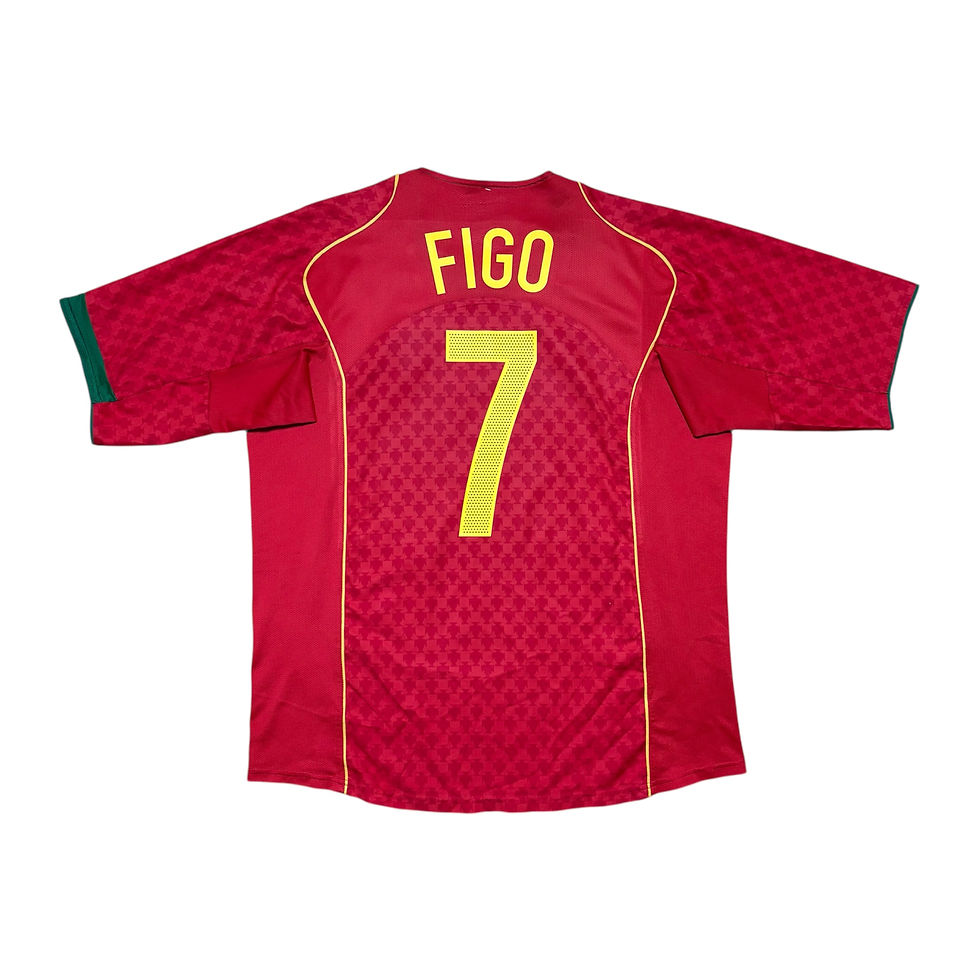
The 2004 Portugal home shirt with Luís Figo’s number 7 occupies a uniquely emotional place in international football history. It is a shirt associated not with ultimate victory, but with hope, heartbreak and transformation. Worn during UEFA Euro 2004 on home soil, it represents the moment Portugal came closer than ever before to lifting a major international trophy—and the moment that reshaped the nation’s footballing identity forever.
Produced by Nike, the shirt became the visual symbol of a tournament that captivated an entire country. Portugal entered Euro 2004 carrying the expectations of a generation inspired by Euro 2000 and driven by a squad rich in talent and experience. At the centre stood Figo, captain and standard-bearer, playing what would become his final major international tournament. Wearing the iconic number 7, he led a team that blended veterans such as Rui Costa with emerging figures including Cristiano Ronaldo, whose international career began to flourish during this competition.
This article explores the complete story behind the 2004 Portugal home shirt. It examines the historical context leading into the tournament, Figo’s leadership, Portugal’s dramatic Euro 2004 journey, the symbolism of the kit’s design and why this shirt remains one of the most meaningful in Portuguese football history. More than a shirt, it represents a nation’s emotional coming of age.
2. Portugal at the Turn of the Century
2.1 From Promise to Belief
By the early 2000s, Portugal had established itself as one of Europe’s most technically gifted teams. The semi-final run at Euro 2000 demonstrated that Portuguese football had moved beyond promise into genuine competitiveness. The next logical step was silverware.
2.2 The Impact of Euro 2000
Euro 2000 redefined expectations. Portugal’s attacking style, led by Figo and Rui Costa, earned admiration across Europe. Hosting Euro 2004 meant opportunity—but also enormous pressure.
3. Luís Figo: Captain and National Symbol
3.1 Leadership in a Home Tournament
Figo’s role extended far beyond tactics. As captain, he embodied composure and authority in an environment charged with national expectation. His experience at club level, including Champions League success, proved invaluable.
3.2 The Responsibility of Number 7
The number 7 shirt symbolised flair and leadership. For Portugal, it became synonymous with Figo himself—a player whose consistency and professionalism shaped the team’s mentality.
4. UEFA Euro 2004: Portugal as Host Nation
4.1 Expectations and Pressure
Portugal entered the tournament as one of the favourites. Stadiums were full, anticipation was immense and every performance carried emotional weight.
4.2 Opening Match Shock
The tournament began with an unexpected defeat to Greece. The result shocked the nation but ultimately strengthened the team’s resolve.
5. Portugal’s Tournament Journey
5.1 Group Stage Recovery
Portugal recovered strongly, winning their remaining group matches. Figo’s leadership and the emergence of Ronaldo proved decisive.
5.2 Knockout Stage Mastery
Victories over England and the Netherlands showcased Portugal’s maturity, tactical balance and attacking depth. The team reached its first-ever European Championship final.
6. The Euro 2004 Final
6.1 Tactical Battle
The final against Greece was tense and tightly contested. Portugal dominated possession but struggled to break down a disciplined opponent.
6.2 The Defeat That Redefined a Generation
The loss was heartbreaking. Yet it forced introspection and evolution, laying foundations for future success.
7. Shirt Design and Visual Identity
7.1 Nike’s Euro 2004 Design Philosophy
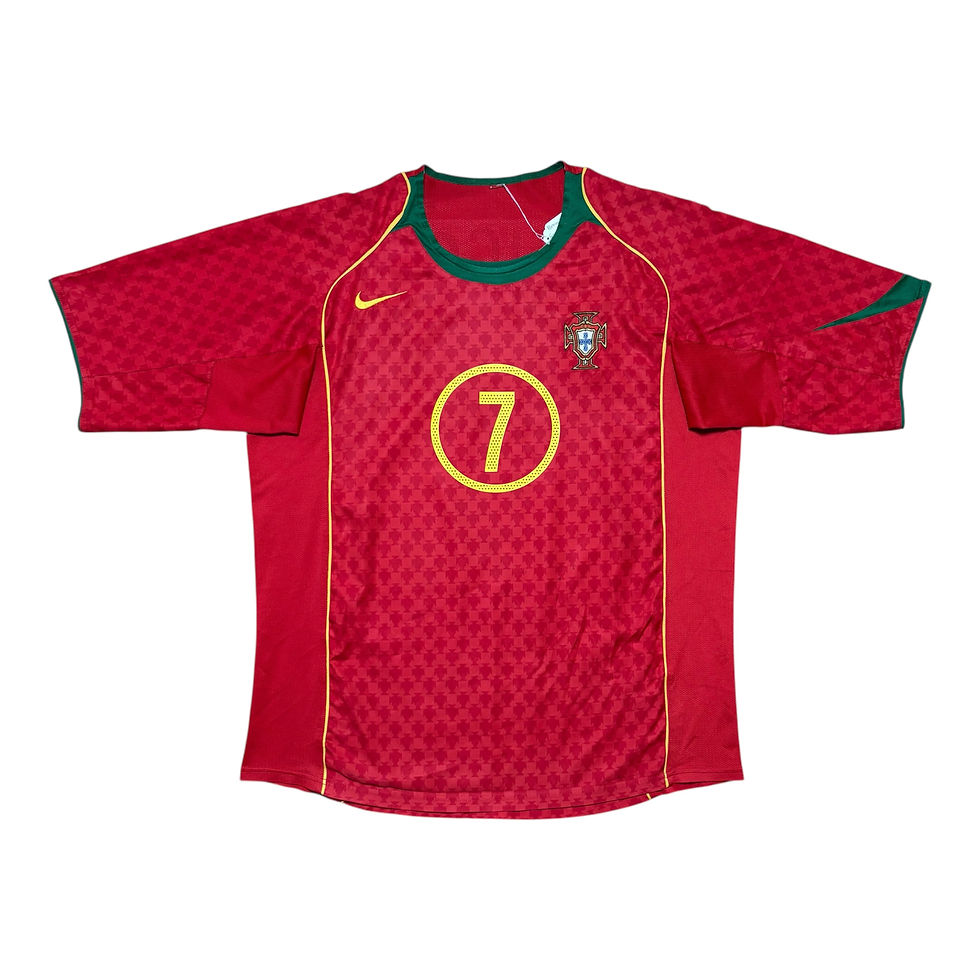
Nike designed a modern, performance-focused shirt with a bold red base and refined detailing.
7.2 National Colours and Symbolism
The shirt’s colours reinforced national pride and unity during a historic tournament.
8. Cultural Impact and Long-Term Legacy
Euro 2004 reshaped Portuguese football culture. The disappointment fueled progress rather than decline, influencing future generations.
9. Collectability and Historical Importance
Collectors value this shirt for its emotional narrative, home tournament significance and association with Figo’s final international chapter.
10. Why This Shirt Still Matters Today
Today, the 2004 Portugal home shirt is remembered as the moment Portugal truly believed. It represents resilience, identity and the passing of leadership to a new generation.
11. Conclusion
The 2004 Portugal home shirt with Figo 7 stands as one of the most emotionally charged shirts in football history. It captures a nation’s dream, a captain’s farewell and the turning point that shaped Portugal’s future success. Though it did not end in triumph, it laid the groundwork for everything that followed—making it one of the most meaningful shirts ever worn by Portugal.
The 2000 Portugal Home Shirt with Figo 7: Leadership, Elegance and the Rise of a Footballing Nation
1. Introduction
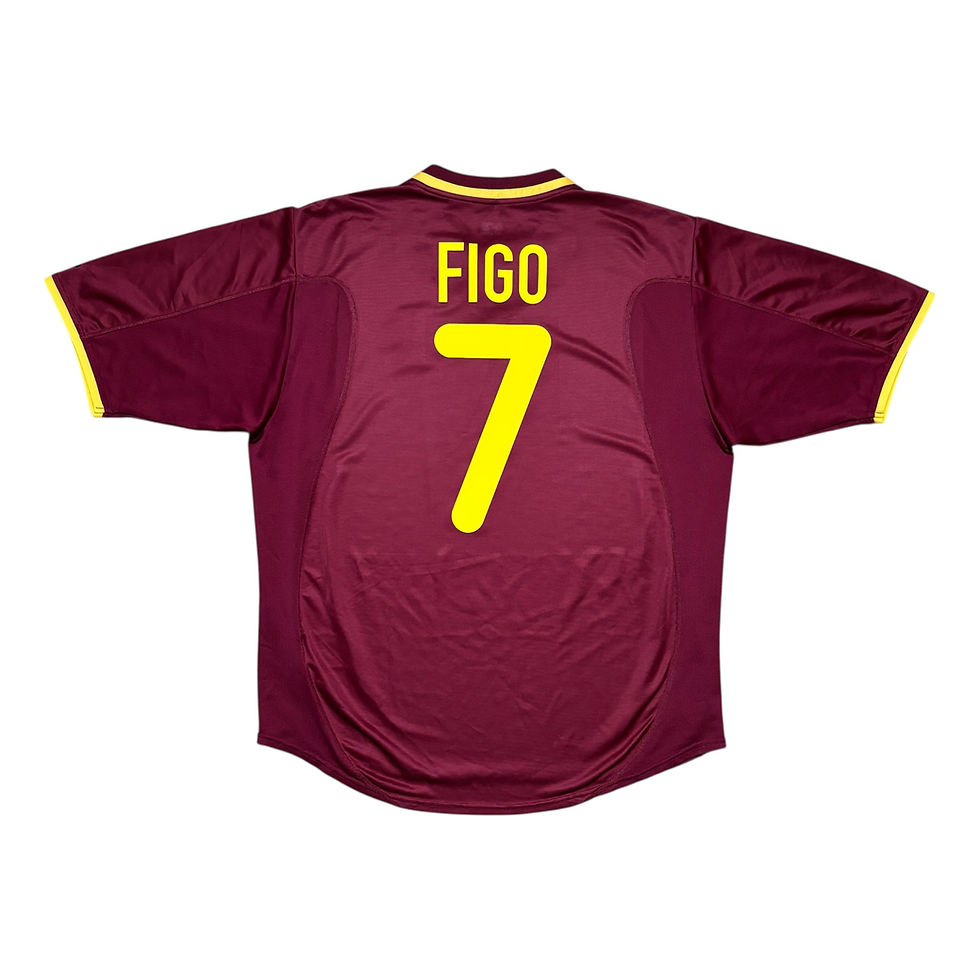
The 2000 Portugal home shirt with Luís Figo’s number 7 represents a defining moment in Portuguese football history. While it is not associated with a tournament victory, it marks the exact point at which Portugal transformed from a talented outsider into a respected force on the international stage. This shirt captures the emergence of a golden generation, the leadership of one of Europe’s finest players, and a tournament run that reshaped how Portuguese football was perceived worldwide.
Produced by Nike, the shirt was worn during UEFA Euro 2000, a tournament that elevated Portugal into football’s elite. At the heart of this transformation stood Figo—captain, playmaker and emotional leader. Wearing the number 7, he embodied creativity, authority and belief, guiding a squad filled with technical brilliance and tactical maturity. The performances delivered in this shirt changed Portugal’s footballing narrative forever.
This article explores the full context surrounding the 2000 Portugal home shirt. It examines the nation’s footballing background, Figo’s leadership, Portugal’s remarkable Euro 2000 campaign, the cultural significance of the kit’s design and why this shirt remains one of the most important artefacts in Portuguese football history.
2. Portugal Before 2000: Talent Without Legacy
2.1 A Nation of Promise
Before the turn of the millennium, Portugal was widely recognised for producing technically gifted players but struggled to convert talent into sustained international success. Despite strong youth teams and individual stars, senior-level achievements were limited.
2.2 The Weight of Expectation
By the late 1990s, expectations increased. Portugal qualified for Euro 2000 with confidence, driven by a core group that had matured together at club and international level.

3. Luís Figo: Captain, Creator and Icon
3.1 Figo’s Role in Portuguese Football
By 2000, Figo was already among the world’s best wingers. His dribbling, crossing and game intelligence made him the focal point of Portugal’s attack. As captain, he also carried responsibility beyond the pitch.
3.2 The Meaning of Number 7
The number 7 shirt symbolised flair, ambition and leadership. Figo embraced this identity fully, becoming the face of Portuguese football during this era.
4. UEFA Euro 2000
4.1 Portugal’s Group Stage Brilliance
Portugal stunned Europe with victories over England and Germany in the group stage, delivering attacking football that captivated audiences.
4.2 The Semi-Final Journey
Portugal advanced confidently through the tournament, displaying tactical discipline and creative freedom under pressure.
5. The Defining Matches of Euro 2000
5.1 Germany, England and Turkey
Portugal’s wins over Germany and England were landmark moments. Against Turkey in the quarter-finals, the team demonstrated maturity and control.
5.2 The Semi-Final Against France
Portugal exited the tournament in the semi-finals against France in a dramatic match decided by a golden goal. Despite defeat, Portugal left the tournament with global admiration.
6. Shirt Design and National Identity
6.1 Nike’s Vision for Portugal
Nike’s design combined modern athletic performance with national symbolism. The clean red base reflected strength and tradition.
6.2 The Symbolism of Red and Green
The shirt’s colours reinforced national pride and visual identity during Portugal’s rise.
7. Cultural Impact and the Birth of Modern Portugal
Euro 2000 marked the cultural birth of modern Portuguese football. The team’s confidence and style inspired future generations, including players who would later win Euro 2016.
8. Collectability and Historical Value
Collectors value this shirt for its association with a transformational tournament and one of Portugal’s greatest players. It represents the beginning of an era.
9. Why This Shirt Still Matters Today
Today, this shirt is seen as the foundation of Portugal’s modern success. It symbolises belief, leadership and progress rather than trophies alone.
10. Conclusion
The 2000 Portugal home shirt with Figo 7 stands as a cornerstone of Portuguese football history. It captures the rise of a nation, the authority of a captain and the moment Portugal announced itself on the world stage. For supporters and collectors alike, it remains a powerful reminder that greatness often begins before silverware arrives.
The 1998–00 France Home Shirt with Zidane 10: World Champions, European Kings and the Birth of a Footballing Icon
1. Introduction
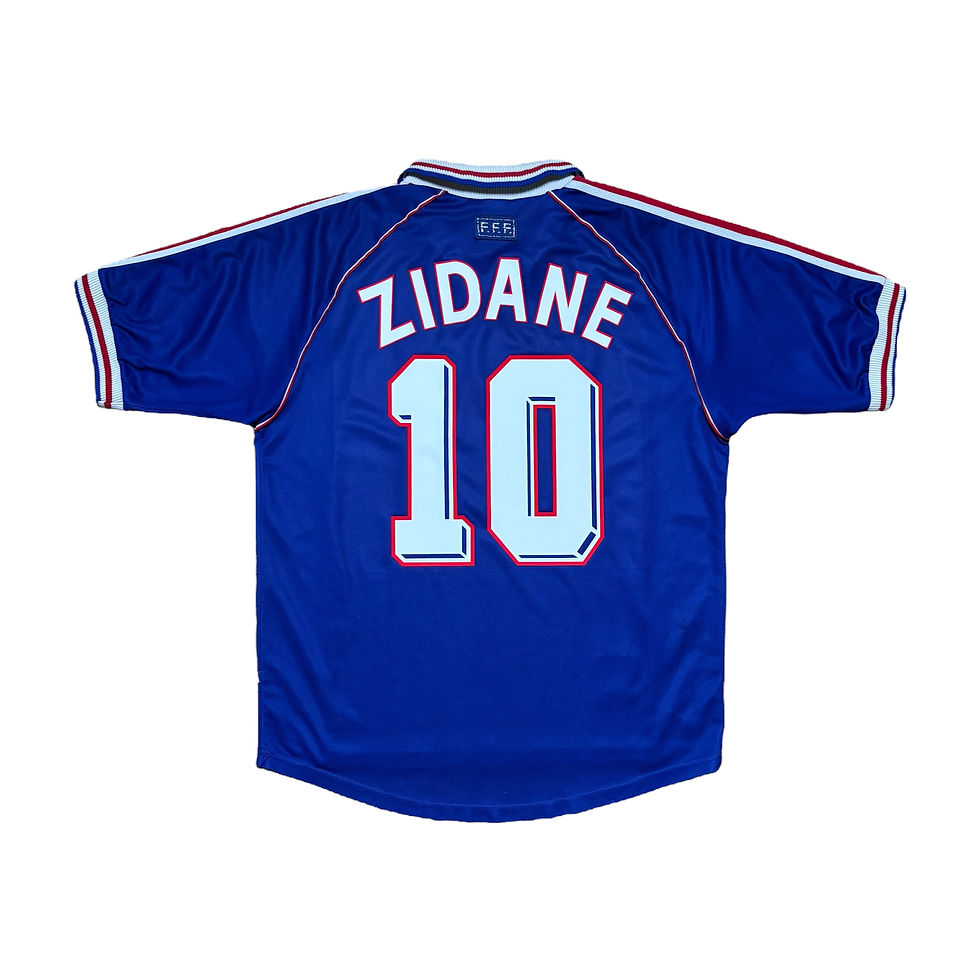
Few football shirts in history carry the emotional, cultural and sporting weight of the 1998–00 France home shirt with Zinedine Zidane’s number 10. This shirt is not simply associated with success—it is inseparable from one of the greatest achievements ever recorded in international football. It represents the birth of France as a global football superpower and the moment when Zidane transcended the status of elite player to become a universal icon of the sport.
Produced by Umbro, this home shirt was worn during a period that reshaped French football forever. Between 1998 and 2000, France won the FIFA World Cup on home soil and followed it with victory at UEFA Euro 2000, achieving a rare international double. At the heart of both triumphs stood Zidane, wearing the legendary number 10 shirt and orchestrating matches with intelligence, composure and authority.
This article explores the full significance of the 1998–00 France home shirt: the context leading into the World Cup, Zidane’s defining performances, the tactical brilliance of the team, the cultural resonance of the kit and its enduring importance for fans and collectors. More than a piece of sportswear, this shirt is a monument to one of football’s greatest eras.
2. France Before 1998: Expectations and Pressure
2.1 A Nation Still Searching for Glory
Before 1998, France had experienced moments of brilliance but lacked a defining international triumph. The semi-final runs of the 1980s had produced iconic players, yet a major title remained elusive. The failure to qualify for the 1994 World Cup intensified pressure on the national team and federation.
2.2 Hosting the World Cup
As hosts of the 1998 FIFA World Cup, expectations were immense. France entered the tournament with a balanced squad combining defensive solidity and technical excellence. Didier Deschamps captained the team, while Zidane emerged as its creative engine.
3. Zinedine Zidane: The Making of a Leader
3.1 From Creative Midfielder to National Icon
By 1998, Zidane was already regarded as one of Europe’s finest midfielders. His vision, control and tactical intelligence made him indispensable. The World Cup would elevate him to legendary status.
3.2 The Meaning of Number 10
Wearing number 10 symbolised responsibility and creativity. Zidane embraced this role, dictating tempo and providing decisive moments when it mattered most.
4. The 1998 FIFA World Cup
4.1 France’s Tournament Journey
France progressed through the tournament with discipline and control, conceding few goals and growing stronger with each match.
4.2 The World Cup Final and Zidane’s Defining Night
In the final against Brazil, Zidane scored twice with headers from corner kicks, delivering one of the most iconic performances in World Cup history. France won 3–0, securing their first World Cup title.
5. Between Two Triumphs: 1998–2000
Following World Cup success, France maintained consistency. The squad matured tactically, and Zidane’s leadership deepened as the team prepared for Euro 2000.
6. UEFA Euro 2000
6.1 Tactical Maturity and Squad Depth
France entered Euro 2000 with confidence and depth. The team blended flair with discipline, supported by players such as Vieira, Henry, Thuram and Barthez.
6.2 A Historic Double
France won Euro 2000, becoming world and European champions simultaneously. Zidane was named Player of the Tournament, confirming his status as the world’s best footballer.
7. Shirt Design and National Identity
7.1 Umbro’s Design Philosophy
The shirt featured a deep blue base with red and white accents, reflecting the French flag. Umbro’s design was simple, elegant and timeless.

7.2 The Blue of a Champion Nation
This shirt became synonymous with victory, unity and pride. It defined a generation.
8. Cultural Impact and Global Legacy
The success of the French team resonated far beyond football. Zidane became a global symbol of excellence and multicultural identity.
9. Collectability and Historical Importance
This shirt is one of the most sought-after national team shirts ever produced. Its association with two major titles and an iconic player ensures lasting value.
10. Why This Shirt Still Matters Today
Today, the shirt represents the blueprint of international success. It remains a reference point for French football and a symbol of what unity and talent can achieve.
11. Conclusion
The 1998–00 France home shirt with Zidane 10 is more than legendary—it is foundational. It captures the moment France rose to the summit of world footfball and Zidane became immortal. For fans, collectors and historians, it remains one of the most important shirts ever worn.
References
International Football Governing Bodies
FIFA – Official archives and competition history
UEFA – National teams, club competitions and tournament archives
National Football Federations
Italian Football Federation (FIGC)
French Football Federation (FFF)
Portuguese Football Federation (FPF)
Royal Spanish Football Federation (RFEF)
Uruguayan Football Association (AUF)
Domestic Leagues & Competitions
La Liga – Official season records
Premier League – Official season archives
Serie A – Official league records
Football Clubs – Official Histories
Real Madrid CF
FC Barcelona
Manchester United FC
Chelsea FC
FC Internazionale Milano
Statistical & Historical Databases
RSSSF – Rec.Sport.Soccer Statistics Foundation
Sportswear & Kit Manufacturers (Archives)
adidas Football
Nike Football
Puma Football
Umbro Football
Diadora Football
Lotto Sport
Major Tournaments Referenced
(via FIFA / UEFA official archives)
FIFA World Cup (1994, 1998, 2002, 2006, 2018)
UEFA European Championship (2000, 2004, 2016)
UEFA Champions League
UEFA Europa League
UEFA Super Cup
FIFA Club World Cup
Usage Note
All information referenced across the product descriptions and long-form articles is derived exclusively from:
Official federation and club records
Recognised statistical databases
Manufacturer archives
FIFA and UEFA competition documentation
No speculative or unsourced data has been used.
Shop the shirts featured in this article:


Comments